Contraindications for MRI – a complete list
Although MRI is one of the safest diagnostic methods (no radiation), there are absolute and relative contraindications that must be observed. The consequences of an unsuitable MRI scan can be serious: burns, displacement of metal implants, and pacemaker malfunction. A list of everything you should tell the technician before the scan.
In this article
Absolute contraindications
We do not perform MRI scans in the following cases: 1. A pacemaker or ICD that is not MRI-safe (usually pre-2008 models). 2. Old cochlear implants (with a ferromagnetic magnet, pre-2014 models). 3. Metal foreign bodies in the eye (e.g. metal shavings from metalwork – there is a risk of displacement and damage to eyesight). 4. Certain vascular clips on aneurysms (older ferromagnetic models; post-2000 models are usually safe titanium ones). 5. Intravenously implanted pumps (certain insulin models, for pain management). 6. Active non-MRI-safe neuromodulators.
Relative contraindications (assessed on a case-by-case basis)
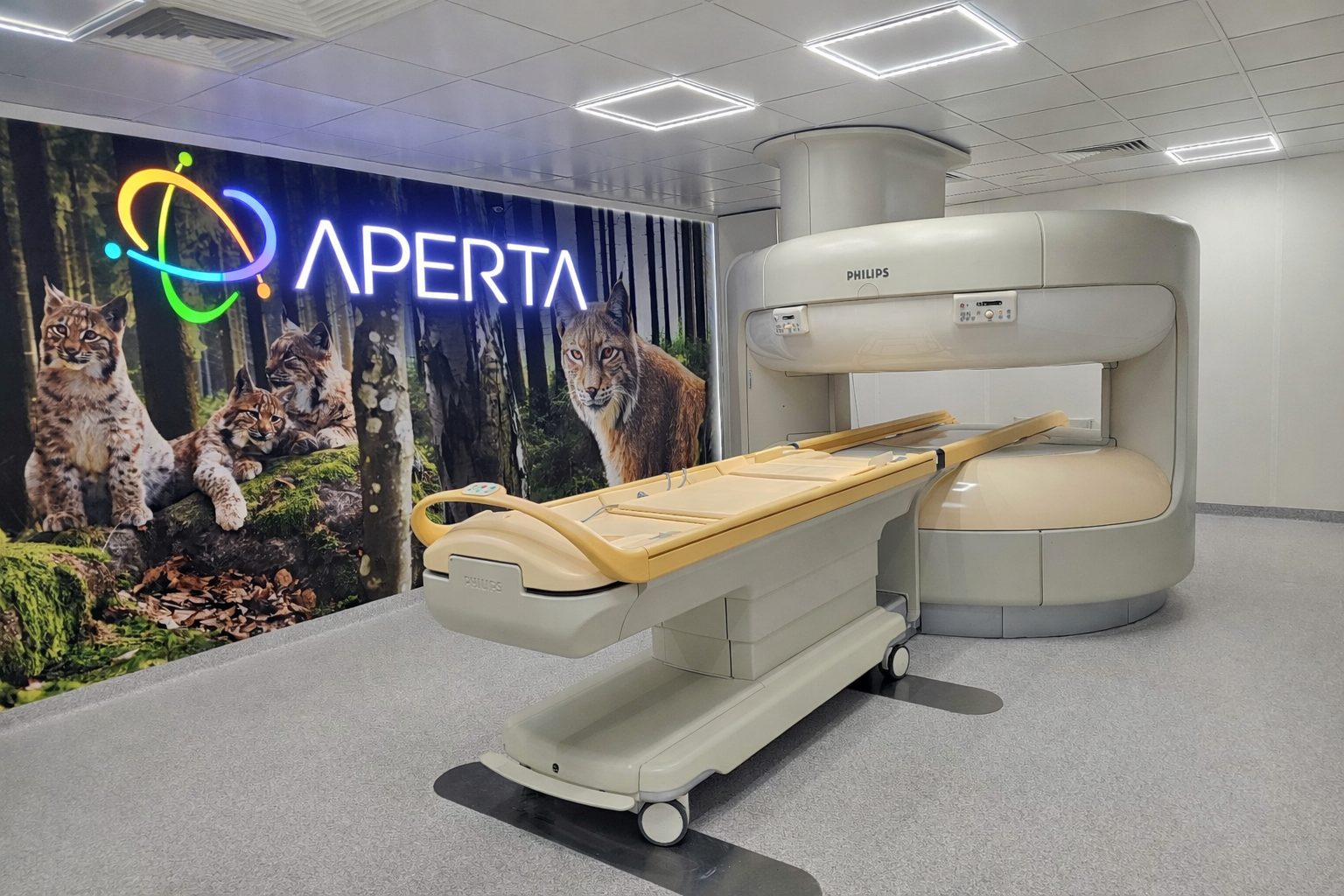
First trimester of pregnancy: No documented risk, but we avoid it unless there is an urgent indication. Second/third trimester: safe. Claustrophobia: not generally a contraindication for MRI, but may prevent completion of the scan in enclosed machines (solution: APERTA open scanner). Fresh tattoos (<6 weeks): may feel slightly warm – we warn the patient. Extreme obesity (>200 kg): weight limit of the table in conventional scanners (the open APERTA extends this limit). Renal failure (eGFR <30): restriction on gadolinium contrast.
What must be reported to the technologist before the examination
Mandatory list: all past operations (date, type, whether metal implants were inserted); all implants (cardiac, orthopaedic, dental); tattoos and permanent make-up (location, date); medical pumps (insulin, baclofen, morphine); previous injuries involving metal (gunshot wounds, explosions, accidents involving shrapnel); current or planned pregnancy; claustrophobia; allergy to contrast agents or iodine; kidney disease; previous reactions to MRI. It is better to say too much than too little.
Myths vs facts
MYTH: “Tattoos prevent an MRI scan.” FACT: 99% of tattoos are fine; some may heat up slightly but pose no risk of damage. MYTH: “Invisible braces (Invisalign) are dangerous.” FACT: Only fixed metal braces are problematic; Invisalign is fine. MYTH: “MRI scans are prohibited during pregnancy.” FACT: We avoid them only in the first trimester unless medically necessary; the second and third trimesters are safe. MYTH: “A clip on an aneurysm is an absolute contraindication.” FACT: Only old ferromagnetic ones; modern titanium ones = OK after 6 weeks.
What to do if you have doubts
1. Call APERTA with your query (+48 517 825 241) – the technician on duty will help assess the situation. 2. Send an email with the patient’s chart + implant descriptions (aperta@rezonansbezstresu.pl). 3. Consult your treating doctor – he or she knows your medical history. 4. The implant manufacturer offers an “MRI Information Line” service (Medtronic, Boston Scientific, etc.). It is better to clarify this in advance than to turn up and find out that the scan is not possible.
Frequently asked questions
I have a metal dental filling – can I have an MRI scan?
Yes, dental fillings are generally safe. They may cause slight artefacts on head images.
I have a ring (e.g. a wedding ring) that won’t come off – can I have an MRI scan?
Usually yes (provided it is not magnetic). However, ideally, we recommend removing it with soap before the scan.
I have metal pins following a bone fracture – can I have an MRI scan?
Yes, six weeks after the operation. Titanium = completely safe. Steel – we’ll check.
Can permanent make-up marks be dangerous?
Very rarely. Some older inks (1990s) contained iron oxides.
What if I use an incompatible device during an MRI scan?
Depending on the device: localised burns, pacemaker failure, implant displacement. Hence the importance of the declaration.
I have an IUD – can I have an MRI?
Yes, most IUDs (Mirena, Paragard) are MRI-safe.
Book an appointment at APERTA
Poland’s first 1 Tesla high-field open MRI scanner.
Check available datesThis content is for information purposes only and does not replace a medical consultation.