Breast MRI screening – when and why?
Breast MRI is the most sensitive imaging method in the diagnosis of breast cancer – its sensitivity ranges from 94–100%, significantly higher than that of mammography (60–90%) and ultrasound (70–85%). However, it does not replace mammography, but complements it in selected groups of high-risk patients. I will explain when breast MRI is recommended, how to prepare for it and what to expect.
In this article
Who is recommended for breast MRI screening?
Polish and international guidelines (ESMO, ACR) recommend breast MRI as a supplement to mammography in the following groups: carriers of BRCA1/BRCA2 mutations (starting at 25–30 years of age); women with a strong family history (>20% lifetime risk); patients who have undergone chest radiotherapy in their youth (e.g. Hodgkin’s disease); women with very dense breasts (category D in ACR BI-RADS); patients with a previous biopsy indicating atypia.
What does a breast MRI scan involve?
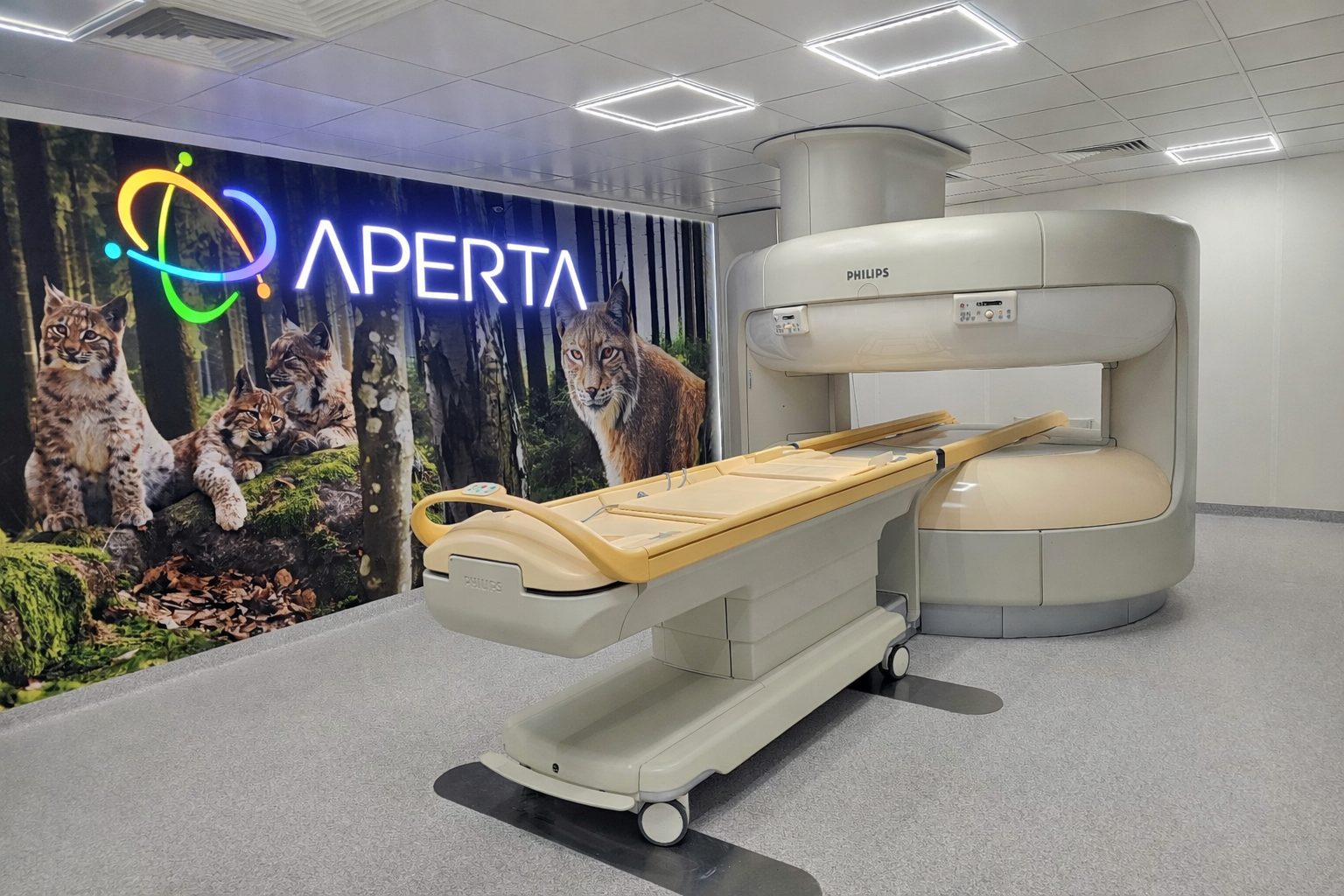
The patient lies on her stomach, with her breasts in special openings fitted with dedicated coils. The scan takes 30–45 minutes, and gadolinium contrast is administered intravenously (usually ~15 ml). The scanner takes a series of images before and after the contrast is administered. The procedure is painless, and noise is reduced by headphones. At APERTA, the open 1T scanner allows for greater comfort for patients with claustrophobia or following a partial mastectomy.
When to have a breast MRI during the menstrual cycle
The optimal time is days 7–14 of the cycle, when hormonal activity is at its lowest. This reduces the number of false-positive results (the normal contrast of glandular tissue in the luteal phase can distort the image). In postmenopausal women or those who have undergone oophorectomy, the scan can be performed at any time. Patients on HRT should discontinue treatment 4–6 weeks beforehand (after consulting a gynaecologist).
What does “BI-RADS” mean in a breast MRI report?
BI-RADS is a standard radiological assessment scale: BI-RADS 1 = normal findings; BI-RADS 2 = benign lesion (e.g. cyst); BI-RADS 3 = probably benign, follow-up in 6 months; BI-RADS 4 = suspicious, biopsy recommended (4a 2–10%, 4b 10–50%, 4c 50–95% probability of cancer); BI-RADS 5 = highly suspicious (>95%); BI-RADS 6 = confirmed cancer. Don’t panic if you get a BI-RADS 4a – in over 90% of cases, a biopsy reveals a benign lesion.
Benefits and limitations of breast MRI
Benefits: highest sensitivity, no radiation, ability to assess breasts with implants, assessment of tumour extent prior to surgical treatment. Limitations: lower specificity (more false positives – approx. 10% of patients require an additional biopsy), higher cost (~800–1,500 PLN), administration of contrast medium (rare allergic reactions), requires only the patient’s cooperation for 30–45 minutes, unavailable in many regions (APERTA is one of the options in south-eastern Poland).
Frequently asked questions
Does breast MRI replace mammography?
No. It complements mammography in high-risk women. Mammography detects calcifications (microcalcifications – an early sign of cancer), whereas MRI usually does not show them.
Can I have a breast MRI with implants?
Yes, it is even the preferred method in this case. MRI assesses the integrity of the implants and the surrounding tissue.
What is the cost of a breast MRI scan?
At APERTA, the breast MRI package with contrast: please contact us for a current quote. The National Health Service (NFZ) only reimburses in selected cases.
Will I receive the results on the same day?
Preliminary information within 24 hours, full radiological report within 48–72 hours. Urgent cases: immediate telephone consultation with a radiologist.
What if the result is BI-RADS 4 or 5?
We will refer you to a breast specialist or oncologist. APERTA collaborates with leading oncology centres in Poland.
Do I need to fast?
A light meal 2–3 hours before the scan is fine. Avoid coffee and caffeine on the day of the scan (they may affect the tissue image).
This content is for information purposes only and does not replace a medical consultation.