
What Is an MRI? A Complete Guide 2026
Magnetic resonance imaging (MRI) is a modern medical imaging method that allows for detailed images of the body’s interior without the use of ionizing radiation. Unlike computed tomography, MRI uses a strong magnetic field and radio waves, making it safe for repeated use—even in children and pregnant women (when medically indicated).
In this article
How does magnetic resonance imaging work?
An MRI machine generates a strong magnetic field (typically 1 T to 3 T) that aligns the hydrogen atoms in the body. It then sends out radio waves that temporarily disrupt the alignment of these atoms. As they return to their original state, they emit signals that a computer converts into detailed 3D images. The entire process is painless and does not affect the body’s cells.
Types of MRI machines
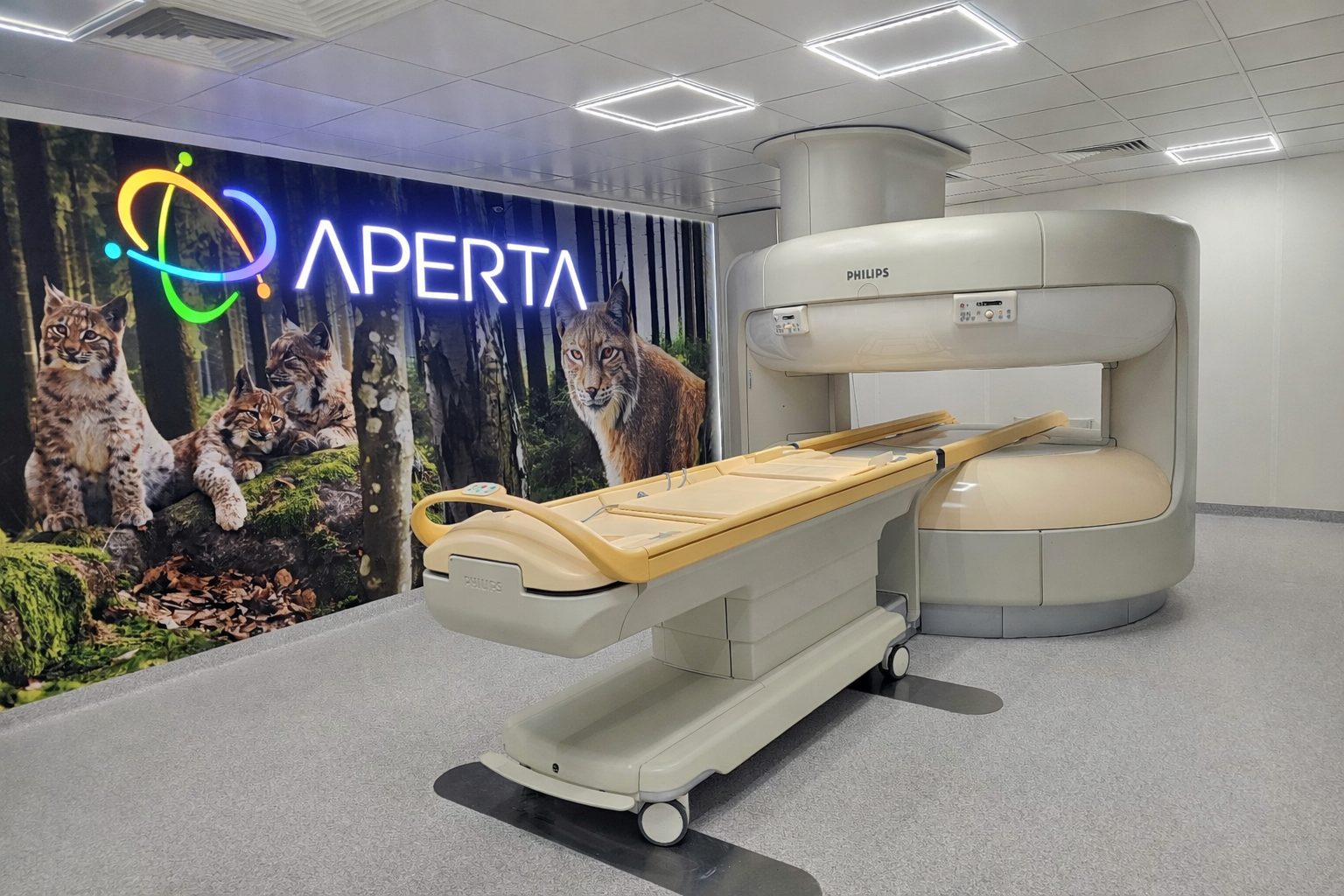
We distinguish between closed machines (tunnel ~60 cm, most commonly 1.5 T), open low-field machines (0.3–0.6 T, greater comfort but lower quality), and modern open high-field machines (1 T)—combining the comfort of an open space with the diagnostic quality of closed machines. APERTA in Rzeszów has the only 1T HFO scanner in Poland.
Main indications for MRI
MRI is the preferred method for diagnosing: brain and spinal cord diseases (multiple sclerosis, epilepsy, strokes), orthopedic conditions (meniscus and ligament injuries, disc herniation), oncology (tumor characterization, staging), the abdomen (liver, pancreas, prostate), gynecology (fibroids, endometriosis), and cardiology (cardiac MRI). It is the method of choice when we want to visualize soft tissues in high resolution.
MRI vs. CT – Differences
CT uses X-rays, while MRI does not. CT is faster (1–5 min) and better for diagnosing bone conditions and acute bleeding. MRI is slower (15–45 min) but offers better soft tissue resolution. In many cases, MRI is preferred due to the absence of radiation—especially in children and patients requiring repeated scans.
Is MRI safe?
MRI is one of the safest diagnostic methods. The main contraindications are: certain pacemakers (check for “MRI compatible”), cochlear implants, metal vascular clips, and metal foreign bodies in the eye. Tattoos and most prostheses are not a problem. The contrast agent (gadolinium) is usually well tolerated; allergic reactions are rare. A consultation with the technologist before the exam is standard procedure.
Frequently Asked Questions
How long does an MRI exam take?
Usually 20–45 minutes, depending on the area. Complex protocols can take up to 60 minutes.
Does an MRI hurt?
No. This exam is completely painless. The only inconvenience is the noise from the machine (which we eliminate with headphones playing music).
Do I need a referral?
It is not required for a private exam, but we recommend having one for the referring physician.
Can I eat before the MRI?
Usually, yes. Exceptions: abdominal scans with contrast (4-hour fast)—we’ll let you know when you check in.
When will I receive the results?
A full medical report within 24–48 hours, via email or on CD.
This content is for informational purposes only and does not replace a medical consultation.