MRI scans for children without general anaesthesia – when is it possible?
More and more parents and doctors are looking for ways to perform an MRI scan on a child without general anaesthesia. Anaesthetic sedation is safe, but it carries additional risks, a longer hospital stay and higher costs. Choosing the right centre and preparing properly can make it possible to avoid anaesthesia even in 4- to 5-year-olds.
In this article
When is anaesthesia really necessary for a child?
Essential: examinations of newborns and infants (up to approx. 18 months) – they do not cooperate; very long protocols (>45 mins) in young children; examinations requiring critical resolution (e.g. spectroscopy, cardiac MRI); children with autism spectrum disorders or other difficulties cooperating. Often not necessary: routine brain/spine/joint examinations in children aged 4+ years in open scanners with appropriate preparation.
Which scanners increase the chance of avoiding sedation?
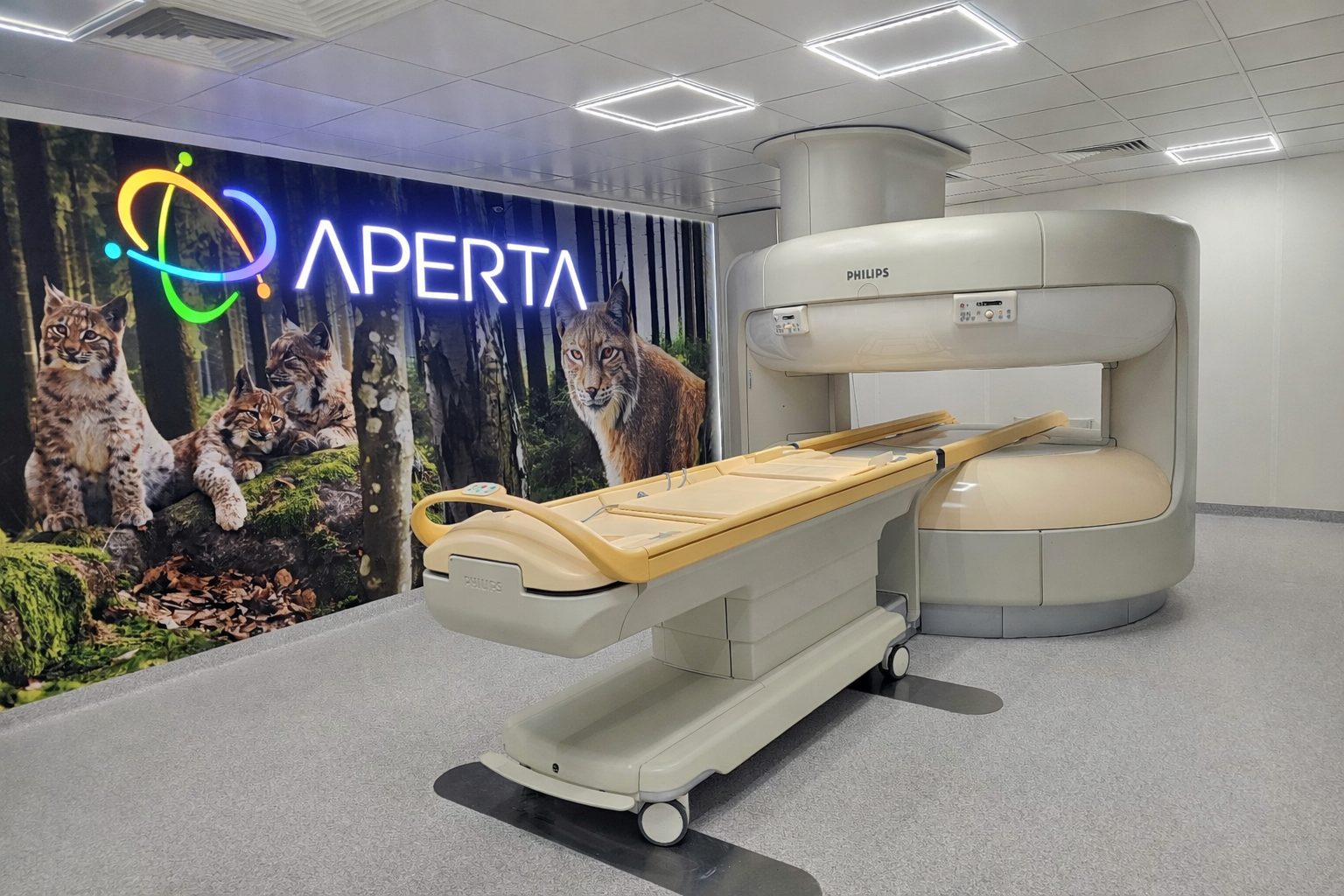
Open-bore 1T high-field scanners have the highest success rate for examinations without sedation in children. Why: no cramped tunnel, the option for a parent to be present, lower noise levels (in some models), and longer protocols can be split into sessions. Classic 1.5T tunnels are physically the most challenging for a child.
Child’s age and success without sedation
Clinical data: children aged 1–3 years: 5–10% success without sedation even in an open scanner; 4 years: ~50%; 5 years: 65–75%; 6–7 years: 75–85%; 8+ years: 90%+. These are averages – individual children may fare significantly better or worse. Personality, previous medical experiences and preparation play a greater role than age alone.
Non-sedation strategy – the parent’s role
The parent’s active role is crucial: being present in the room (holding their hand, maintaining eye contact); psychological preparation beforehand (a video, a book, a conversation); staying calm – the child senses your stress; a story on headphones as a distraction. A parent who is afraid of the MRI themselves will find it harder – it is worth working on your own anxiety.
What to do if the scan doesn’t go well?
Plan B: a 10–15-minute break, then try again using different techniques (more music, a different position). Plan C: reschedule the scan for another day. Plan D: consult an anaesthetist and consider sedation. Don’t blame the child or yourself. Some children simply need sedation – it’s normal and safe.
Frequently asked questions
Can a 4-year-old sit still for 30 minutes?
Some can, some can’t. In an open-mouth unit with a parent present, the chances are much higher.
Can I give my child a sedative on my own?
No. Any medication taken before an MRI must be approved by a doctor.
What if my child has autism?
Please contact us in advance – we will adapt our approach. In some cases, sedation is the safer option.
How much does the scan cost with sedation versus without?
Sedation increases the cost by 30–50% (anaesthetist, monitoring, time).
Can an examination with sedation be performed at APERTA?
Yes, if necessary. We work with anaesthetists.
This content is for information purposes only and does not replace a medical consultation.