Claustrophobia during an MRI scan – what can you do?
Claustrophobia during an MRI scan affects up to 15% of patients. This isn’t a weakness – it’s the body’s natural reaction to a closed, cramped and noisy machine. The good news is that there are effective strategies and alternative machines that allow you to complete the scan without stress or avoid the tunnel altogether.
In this article
Why does a conventional MRI cause claustrophobia?
A standard 1.5T scanner is a tunnel approximately 60 cm in diameter and over 1.5 m long. The patient is slid inside, with their face just a few centimetres from the wall, and the noise reaches 100+ dB. For many people, the mere sight of the tunnel triggers a panic attack. This phenomenon is so common that clinical studies have shown that 1–15% of patients interrupt or do not complete the scan at all.
Self-help techniques before the scan
Effective preparation methods: 4-7-8 breathing (inhale for 4 seconds, hold for 7, exhale for 8), visualising a peaceful place, progressive muscle relaxation (tensing and relaxing different parts of the body). It is a good idea to ask the centre for an introductory visit beforehand – you will see the machine, talk to the technician and get used to the environment.
Premedication – when is it appropriate?
Your GP may prescribe a mild sedative (e.g. a low dose of benzodiazepine) for the duration of the scan. This is an effective solution, but you will need help on the way home (do not drive). Many people do not need premedication if they choose an open scanner.
The best alternative: open MRI
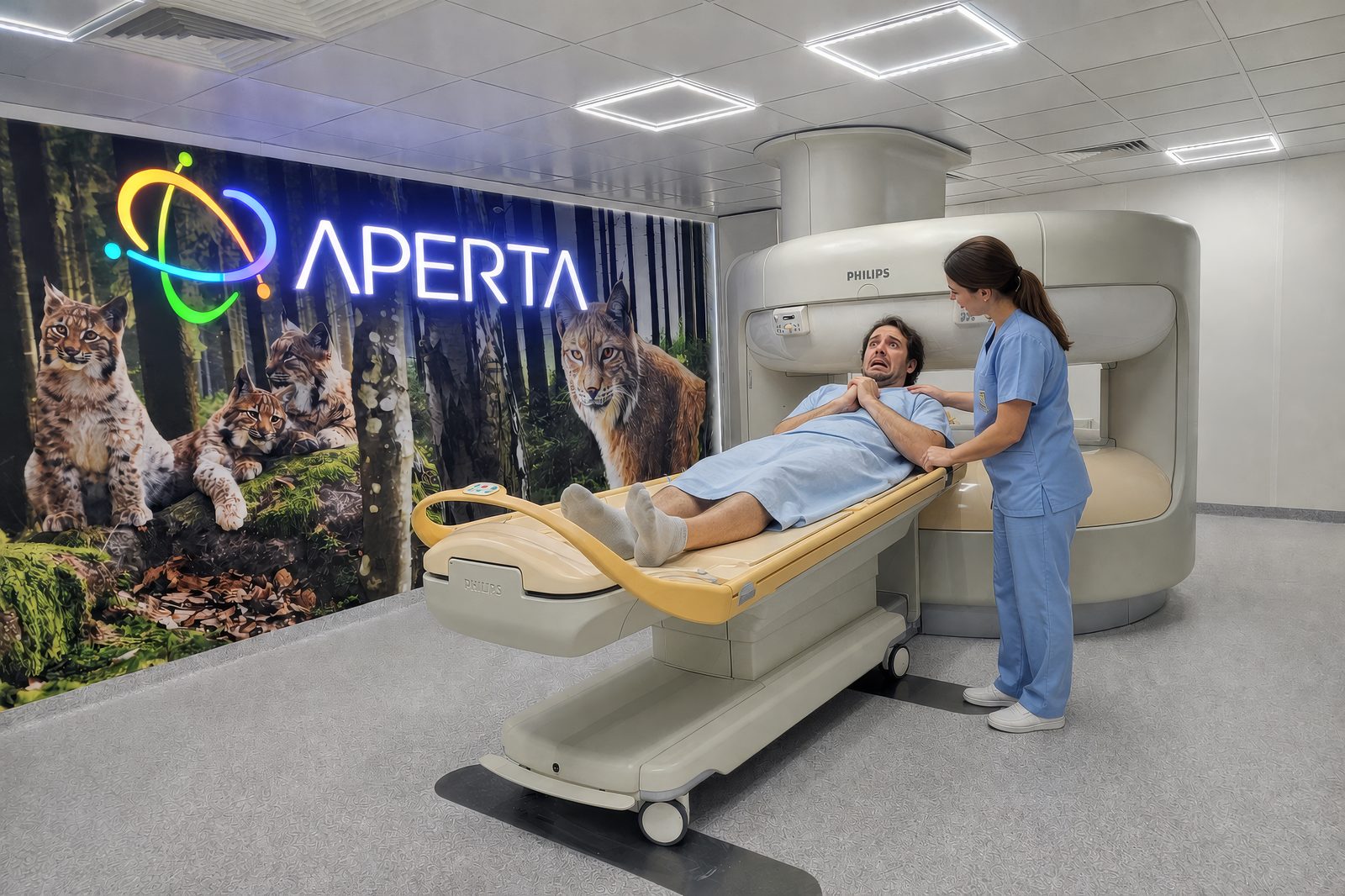
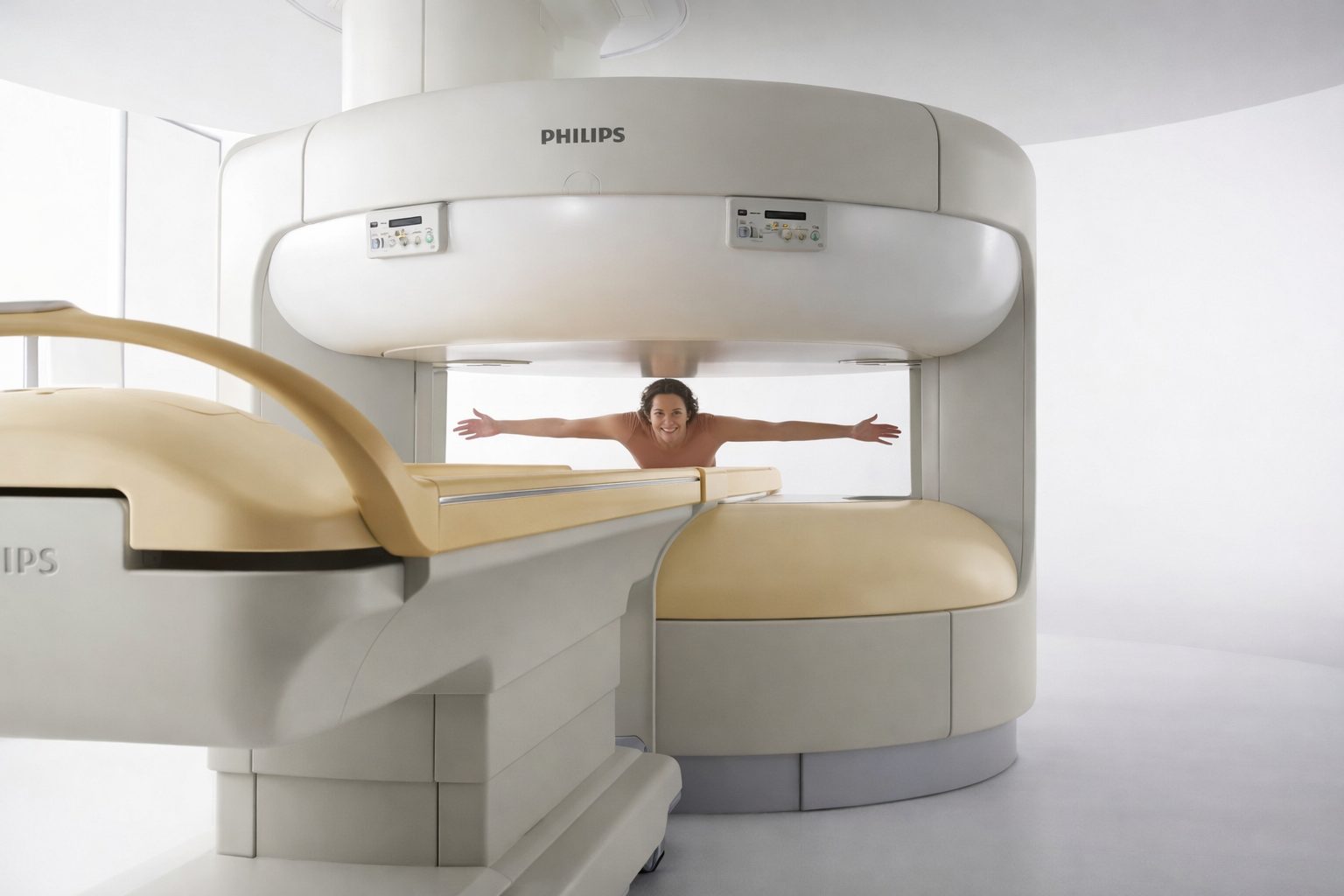
For people with claustrophobia, the most commonly recommended solution is a 1T high-field open MRI. This is a machine without a tunnel – the patient lies in a spacious, bright room, with a loved one by their side, listening to music. The success rate for completing the scan in open MRI machines is 96–100%, compared to 60–85% in closed machines. APERTA in Rzeszów is the only centre of its kind in Poland.
What should I do if, despite everything, I start to panic?
In every professional centre, you will be given a stop button to hold. One press stops the scan. The technician is in constant voice contact via headphones. At APERTA, you can also have a loved one in the room with you. Remember: no one will force you to continue if you feel you need a break.
Frequently asked questions
Can I just take some Xanax and go into the tunnel?
You can – but the effect is limited and you’ll need help getting back out. An open MRI eliminates the problem at source.
Can claustrophobia go away with time?
Yes, but therapy (CBT) takes months. An open MRI is an immediate solution.
Is premedication available at APERTA?
We accept premedication prescribed by your doctor – but in 90% of cases it isn’t necessary.
Can I bring my partner along for the scan?
Yes, always. That’s standard practice here, not an exception.
If I stop the scan, will I have to pay?
At APERTA, we refund 100% of the deposit if you do not complete the examination due to anxiety.
This content is for information purposes only and does not replace a medical consultation.