
1T vs. 1.5T MRI – Which One to Choose?
The choice between a 1 Tesla and a 1.5 Tesla MRI isn’t always obvious. A higher magnetic field doesn’t always mean “better”—it depends on the indication, patient comfort, and availability. This guide will help you understand when to choose which machine and why more and more patients are opting for modern 1T open MRI systems.
In this article
What are the technical differences between 1T and 1.5T?
The main difference is the strength of the magnetic field: 1 Tesla vs. 1.5 Tesla. A higher field strength = a higher signal-to-noise ratio (SNR), which theoretically translates to better resolution. In practice, modern 1T machines with advanced coils and sequences achieve image quality close to that of 1.5T for most routine indications.
Design: tunnel vs. open
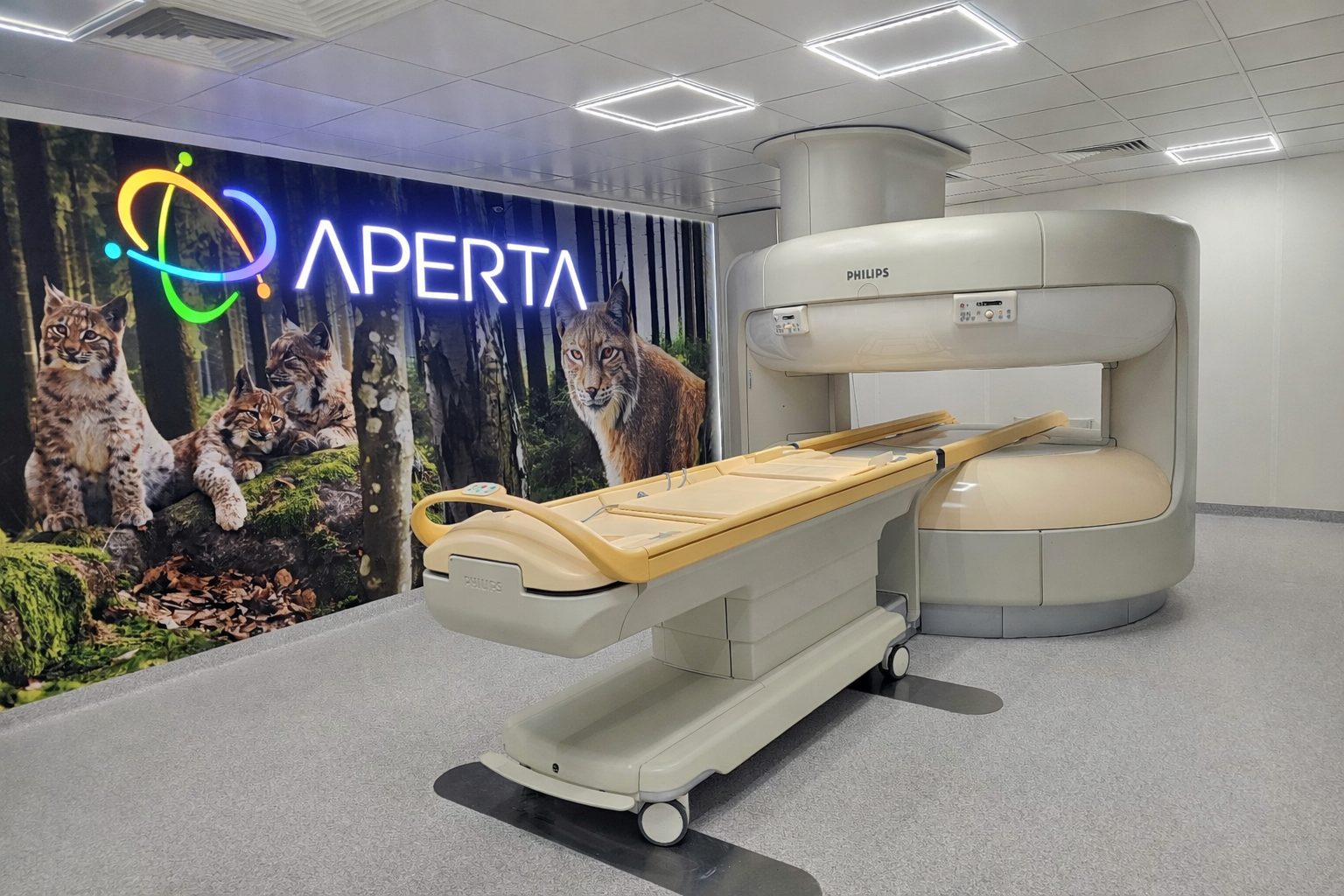
1.5T is almost always a closed-tunnel design (~60 cm in diameter). 1T is available in both configurations, but the key innovation is the 1T open high-field system—the patient lies in a spacious area between two magnets, without being enclosed. This makes a huge difference for patients with claustrophobia, for children, and for larger individuals.
When to choose 1.5T?
1.5T is preferred for: highly advanced neurological diagnostics (fMRI, MRS), perfusion cardiac MRI, BI-RADS breast MRI, and micropathology (microangiopathy, micrometastases <5 mm). If your indication requires maximum resolution and you have no issue with the tunnel—1.5T is the classic choice.
When to choose an open 1T (HFO)?
Choose an open 1T when: you have claustrophobia or have historically been unable to complete an exam in a tunnel; you want to avoid sedation for a child; you are a senior with limited mobility; you have a larger body build (bodybuilder, obesity); the indication is a routine musculoskeletal, neurological, or abdominal MRI. For 80% of clinical indications, 1T HFO provides diagnostically equivalent quality with incomparable comfort.
The practical difference for the patient
From the patient’s perspective: 1T HFO means no tunnel, the ability to be with a loved one, no pressure, and a higher chance of completing the exam without interruption. From a diagnostic perspective: for most routine exams, the quality is comparable. Your doctor can advise whether 1.5T is necessary in your case or if 1T HFO is sufficient.
Frequently Asked Questions
Does 1T provide inferior diagnostic results compared to 1.5T?
No, for most routine indications. Modern 1T systems with advanced protocols provide diagnostic quality equivalent to that of 1.5T closed systems.
Can I change my mind after making an appointment?
Yes. We can always discuss your concerns and adjust the plan.
What if my doctor recommends 1.5T but I have claustrophobia?
Please contact us—in many cases, the quality of 1T HFO is sufficient. We’ll help you talk to your doctor.
How long does a 1T scan take compared to a 1.5T scan?
The acquisition time for 1T is slightly longer (10–20% longer), but the difference is negligible for the patient.
This content is for informational purposes only and does not replace a medical consultation.